

Understand the Difference between Occurrence and Claims Made Policies
The table below highlights the differences between Occurrence and Claims Made Policies.
| CLAIMS-MADE CONTRACTS | OCCURRENCE CONTRACTS |
| Claims-made coverage is operative only if a claim is made in the policy period and provides indemnity for acts, errors, or omissions that occurred during or before the period of insurance up to the retroactive date of the policy (and the insured had no prior knowledge of the incident/circumstance before the period of insurance). In a Claims Made contract, the policy must be in force:
| Occurrence-based coverage is triggered by an occurrence or event during the period of insurance, irrespective of the date the claim was made. In an Occurrence contract, the policy must be in force:
|
Changing from a Claims-Made Policy to an Occurrence Policy The occurrence policy wording will not cover claims made that relate to incidents outside the policy period. If changing from a claims-made policy to an occurrence policy, the policyholder will need to purchase Run off Cover to provide protection for their business activities prior to the inception of the ‘occurrence policy’, or negotiate prior cover with their new insurer, rather than purchasing Run off Cover. | Changing from an Occurrence Policy to a Claims-Made Policy If the policyholder moves from an occurrence-based policy to a claims-made policy, there are no issues. As incidents that occurred during the policy period are covered (subject to the terms of the cover), there is no consideration for the expiring occurrence wording. |
Changing Policy Cover from one Insurer to another For claims-made policies, it is important to negotiate both full retroactive cover and a continuous cover endorsement with the new insurer. | Changing Policy Cover from one Insurer to another For occurrence policies, there are no issues with the occurrence wording. |
The following types of insurance are commonly termed “Claims Made” contracts of insurance:
| Types of Occurrence Policies The following types of insurance are commonly termed “Occurrence” contracts of insurance:
|
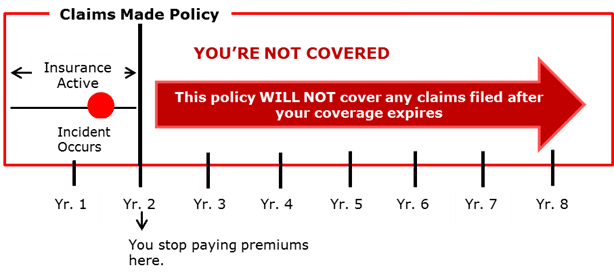
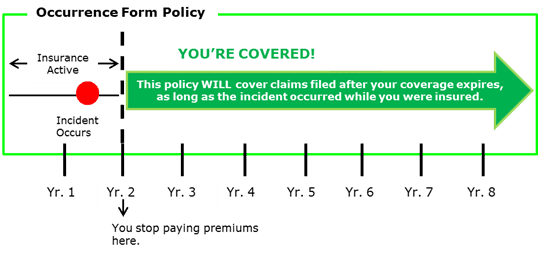
The following diagrams illustrate the difference between Claims Made Policies and Occurrence Policies based on an incident arising whilst a policy was current in Year 1.
Claims Made Policy
With Claims Made Policies, once you have stopped paying your premium, you are no longer covered for unreported claims. Therefore it is imperative to notify potential claims to your insurer immediately and whilst the policy is current and in force.
The following types of insurance are commonly termed “Claims Made” contracts of insurance:
- Professional Indemnity Insurance
- Directors and Officers Liability Insurance
- Management Liability Insurance
- Employment Practices Liability Insurance
- Fidelity Insurance
Occurrence Policy
With Occurrence policies, as long as the incident occurs while the policy is current and in force, you remain covered.
The following types of insurance are commonly termed “Occurrence” contracts of insurance:
- Public and Products Liability Insurance
- Business Property Insurance
- Motor Vehicle Insurance